
Category: Compound Profiles
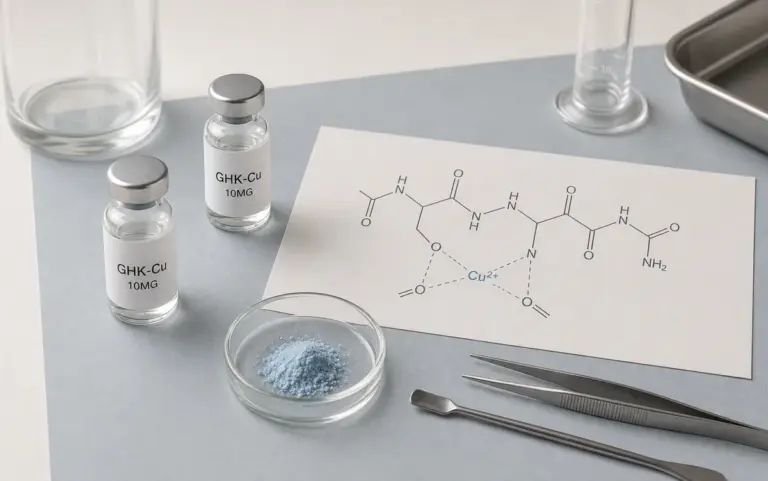
Copper Peptides: Chemistry, Mechanism, and Dermal-Research Applications
GHK-Cu is the most-cited copper peptide in dermal-research literature, but the wider class of tripeptide-copper complexes, including AHK-Cu, is what defines the category.
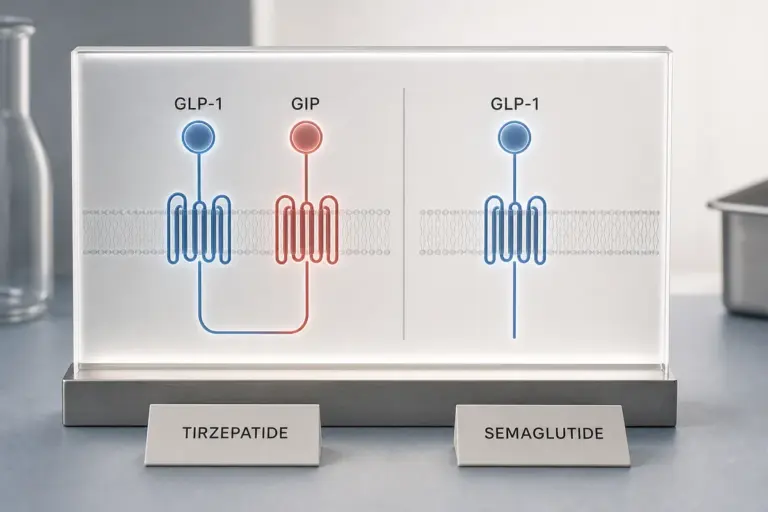
Mounjaro vs Ozempic: Tirzepatide (Dual Agonist) vs Semaglutide (GLP-1)
Mounjaro and Ozempic look like sibling products but contain different molecules. Mounjaro's compound activates two incretin receptors; Ozempic's compound activates one, and that mechanism gap is…
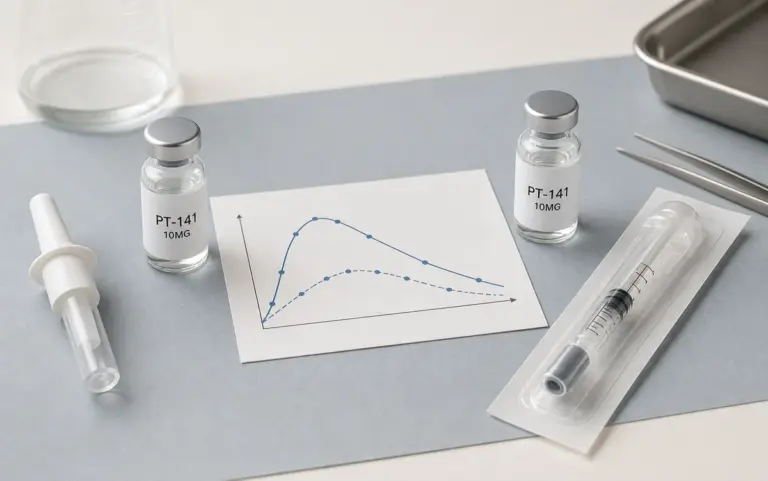
PT-141: Nasal vs Injection Route Pharmacokinetics
PT-141 (bremelanotide) is studied across two delivery routes, intranasal and subcutaneous. The pharmacokinetic profiles diverge, and the choice of route is a research-design variable, not a…
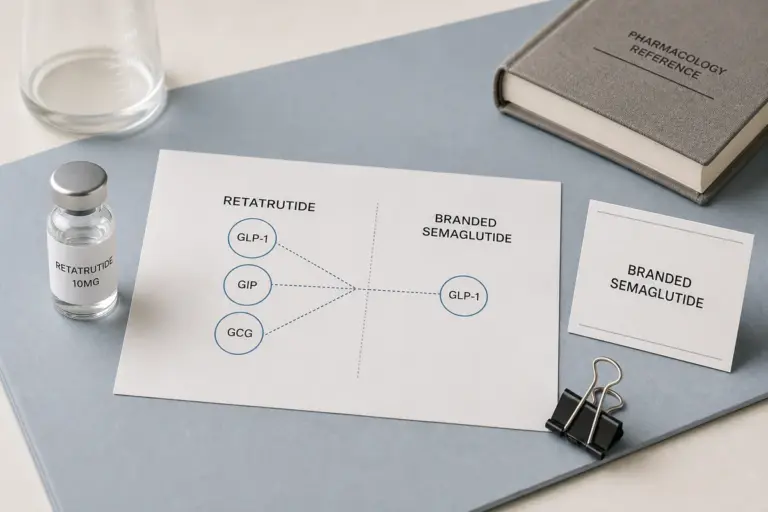
Retatrutide vs Ozempic: Research Compound vs Branded GLP-1
Ozempic is the branded prescription form of semaglutide. Retatrutide is a research-grade triple-agonist peptide. The names sit in different worlds, and the comparison researchers are usually…
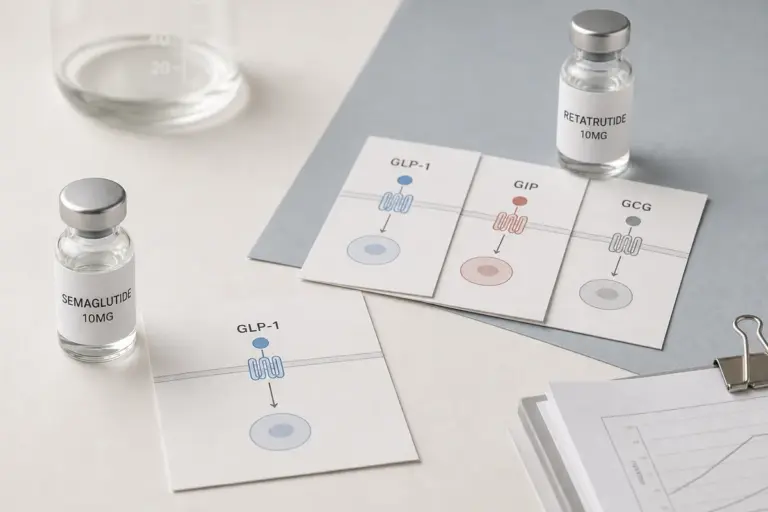
Retatrutide vs Semaglutide: Triple-Agonist vs Single-Pathway GLP-1
Semaglutide engages one receptor; Retatrutide engages three. The mechanism gap is wider than the family relationship suggests, and it changes what each compound is useful for…
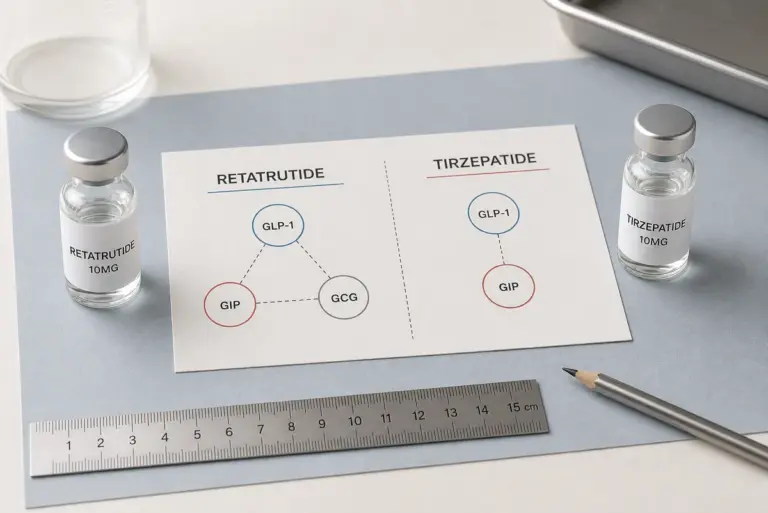
Retatrutide vs Tirzepatide: Triple-Agonist vs Dual-Agonist Mechanism
Both are incretin-mimetic research peptides, but they engage categorically different receptor combinations. The mechanism distinction is what determines which one suits a given protocol.
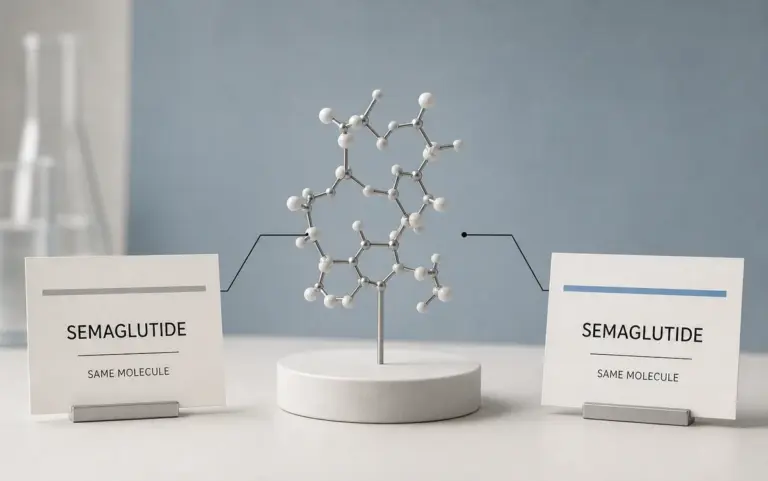
Wegovy vs Ozempic: Same Compound, Different Brand Identity
Wegovy and Ozempic share the same active molecule (semaglutide). They are distinct branded products with different indications and dose strengths, but the mechanism is identical.
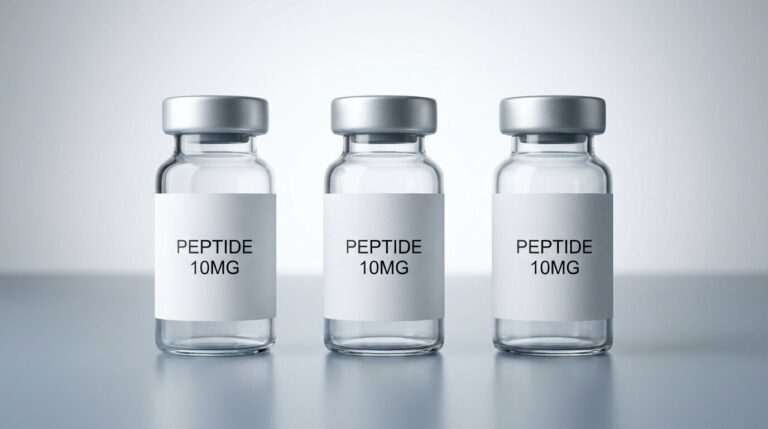
GLP-1, GIP, and Glucagon: How Receptor Profile Shapes Research Outcomes
Single-pathway, dual, and triple agonists produce categorically different downstream effects. The receptor profile a molecule activates is the most consequential decision in any modern incretin-mimetic protocol.
Ipamorelin + CJC-1295: Paired GH-Secretagogue Mechanism in Research
Ipamorelin and CJC-1295 (no DAC) are the canonical GH-secretagogue research pairing. The pairing reflects complementary receptor pathways: ghrelin-receptor agonism plus GHRH-receptor agonism, not a single-mechanism stack.
BPC-157 vs TB-500: Single Compounds or the WOLVERINE Blend?
Two of the most-cited tissue-repair peptides cover complementary mechanisms. When does a research protocol benefit from each individually, and when does the WOLVERINE blend make sense?