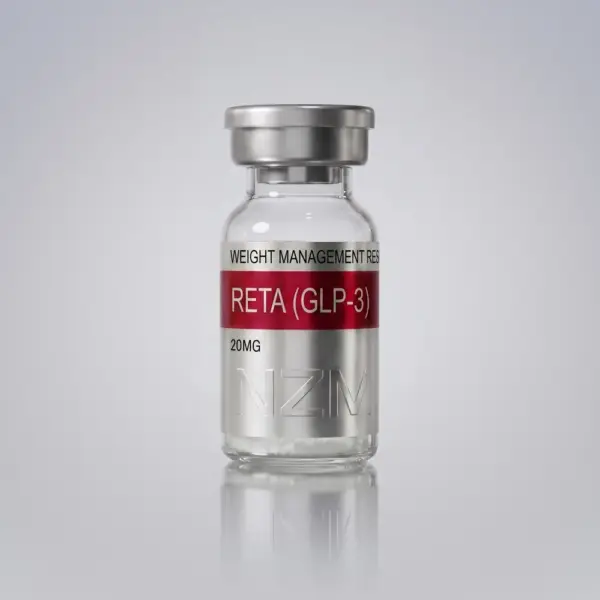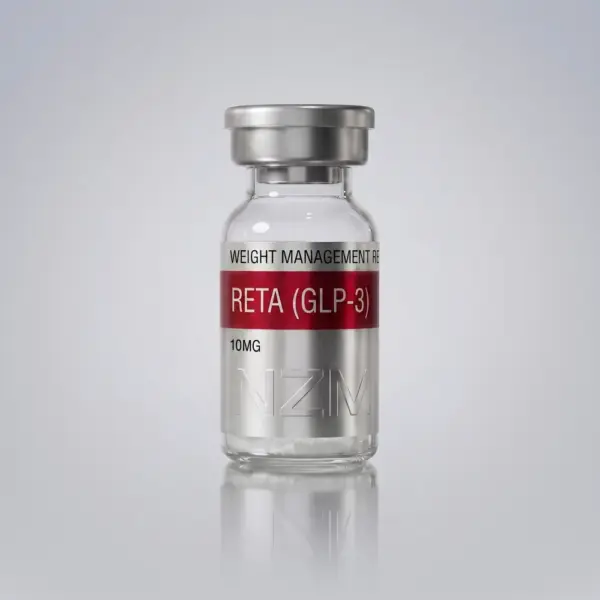
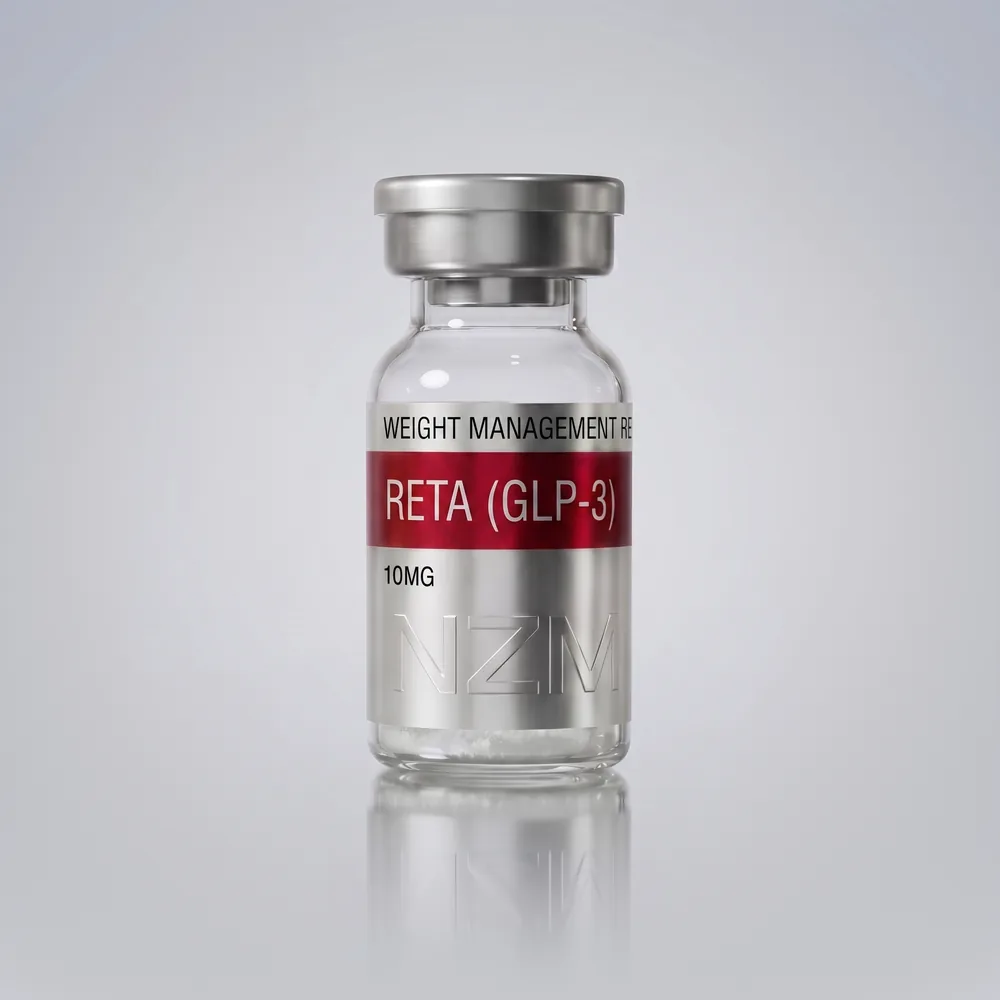
RETATRUTIDE 10 MG Peptide
- ≥99% purity by HPLC
- Janoshik COA with every lot
- Lot-traceable from synthesis
- EU-synthesised
Specifications
Third Party Lab Tested
Every lot is independently HPLC-tested by Janoshik Analytical, Europe's reference laboratory for peptide purity assessment. The COA shipped with your order is theirs, not ours.
Storage & Handling
Lyophilized peptides should be stored below 16°C, protected from light and moisture, for up to 24 months. Once reconstituted, refrigerate and use within 30 days for protocol consistency.
Reconstitution
Reconstitute with bacteriostatic water using the volumes below. Add solvent slowly along the inside wall of the vial. Swirl gently, never shake, until fully dissolved.
Lab-handling protocol BAC Water · 0.9% benzyl alcohol The reconstitution solvent referenced above. Add to order →The triple agonist frontier.
Retatrutide is the most active investigational compound in published metabolic research today. Retatrutide adds glucagon-receptor activation on top of the GLP-1 / GIP profile. Receptor selectivity, pulse kinetics, and downstream effects all sit further from the Retatrutide GLP-1 baseline than any other commercially available analog.
The third pathway recruits hepatic energy expenditure and lipolysis into the response, broadening the metabolic envelope beyond what dual agonists can produce. No wonder that this is one of the most sought after peptides on the market today.
| Compound | Retatrutide |
|---|---|
| Sequence length | 39 amino acids |
| Molecular mass | 4731.2 Da |
| Modeled half-life | ~6 days (modeled) |
| Mechanism / research class | GLP-1R / GIPR / GCGR agonist. |
| Lab handling solvent | 2mL bacteriostatic water (0.9% benzyl alcohol). |
| Resulting concentration | Yields 5mg per 1.0mL |
| Supply format | Retatrutide · 10MG lyophilized research vial |
| Storage, lyophilized | store below 16°C for up to 24 months |
| Storage, reconstituted | refrigerate and use within 30 days |
Synthesised.
Verified.
Documented.

Backed by research.
Measured in results.
Each tag opens the cited literature behind that effect. References are linked to PubMed.
Retatrutide is the first reported GLP-1 / GIP / glucagon triple agonist in published research. The added GCGR activation engages hepatic energy expenditure and lipolysis on top of the dual incretin profile, producing a steeper body-weight response than dual agonists in head-to-head reference trials.
Phase 2 trial reported −24.2% mean body-weight reduction at 48 weeks in the highest published study arm.
- Jastreboff AM et al. Triple-hormone-receptor agonist retatrutide for obesity - a phase 2 trial. NEJM. 2023;389(6):514-526. PubMed ↗
The triple-agonist mechanism is particularly active on hepatic lipid handling. The Retatrutide MASLD substudy reported up to 86% relative liver-fat reduction at 48 weeks - the steepest reduction reported for any incretin analog to date.
- Sanyal AJ et al. Triple agonist retatrutide on MASLD in a phase 2a substudy. Nat Med. 2024;30:2037-2048. PubMed ↗
GCGR engagement adds hepatic energy-expenditure modulation to the response envelope. Research populations show improvements on HOMA-IR and broader insulin-sensitivity markers consistent with the triple-pathway profile.
- Sanyal AJ et al. Nat Med. 2024;30:2037-2048. PubMed ↗
Despite GCGR activation (which can theoretically raise hepatic glucose output), net glycemic effect in research populations remains strongly negative - A1C reductions of 1.7–2.0% reported in the phase 2 trial across the higher dose arms.
- Rosenstock J et al. Retatrutide in T2D. The Lancet. 2023;402(10401):529-544. PubMed ↗
Frequently Asked Questions
No reviews yet
Write a review
Share your experience with RETATRUTIDE 10 MG Peptide. Reviews are published after a manual check.