
Mounjaro vs Ozempic: Tirzepatide (Dual Agonist) vs Semaglutide (GLP-1)
Mounjaro and Ozempic look like sibling products but contain different molecules. Mounjaro's compound activates two incretin receptors; Ozempic's compound activates one, and that mechanism gap is what actually separates them.
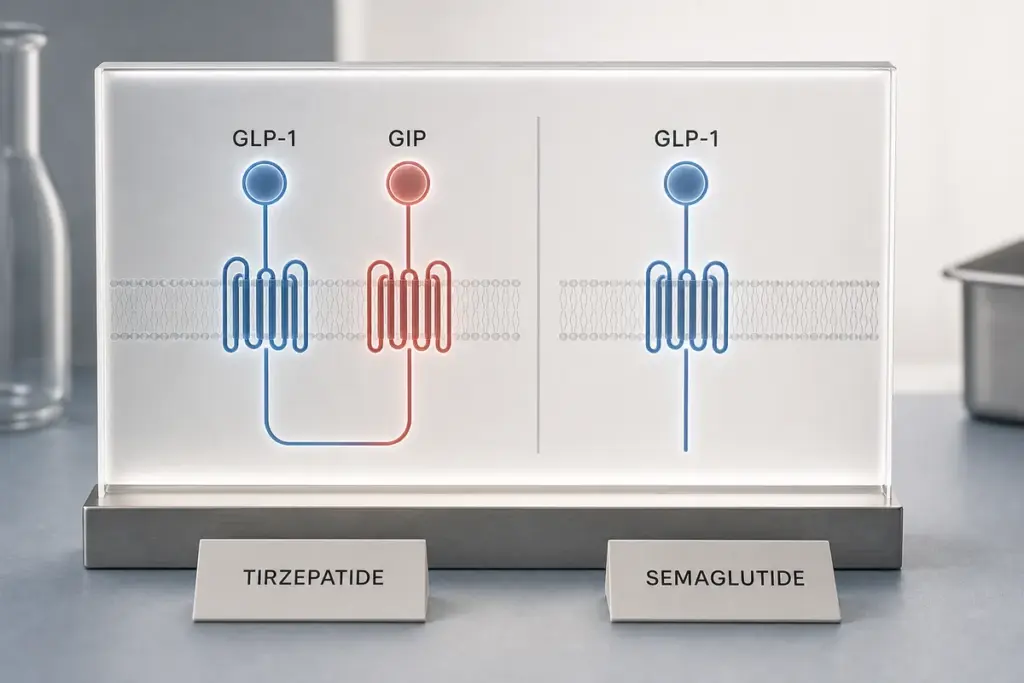
Mounjaro and Ozempic look like sibling products, but they contain different molecules. Mounjaro's active compound is tirzepatide; Ozempic's is semaglutide. The two molecules engage different receptor combinations, and that difference is what separates the products at the level that matters.
This article addresses the mechanism distinction between the two underlying compounds. It is not a consumer or clinical product comparison, and nothing here is treatment or substitution guidance.
Ozempic is semaglutide: one receptor
Semaglutide is a GLP-1 receptor agonist. The FDA label for Ozempic names semaglutide as the active ingredient and describes it as a human GLP-1 receptor agonist. It binds GLP-1R and triggers the downstream cascade: glucose-dependent insulin release, satiety-pathway engagement, and slowed gastric emptying. The receptor profile is narrow.
In research terms, semaglutide is the canonical single-pathway reference compound, the molecule a study reaches for when it needs to isolate GLP-1R-driven response from everything else.
Mounjaro is tirzepatide: GLP-1 plus GIP
Tirzepatide adds GIP-receptor activation to the GLP-1 baseline. The FDA label for Mounjaro names tirzepatide and describes it as a GIP and GLP-1 receptor agonist. The GIP arm engages a separate incretin axis with its own effects on insulin and adipose signaling.
The 2018 Molecular Metabolism paper that introduced tirzepatide characterized it as a single peptide hitting both receptors, producing larger reductions in glucose and body weight in research models than selective GLP-1 agonism. Combined, the two arms produce a broader and steeper metabolic-response curve than single-pathway GLP-1. Where semaglutide isolates GLP-1R, tirzepatide is the canonical instrument for studying how two incretin receptors interact.
What the GIP arm adds
GIP is the other half of the incretin system. Both GIP and GLP-1 are released from the gut after a meal, and for years GIP was the less-studied of the pair. Tirzepatide's design bet was that engaging both at once would do more than engaging GLP-1 alone, and the research bore that out. The dual envelope amplifies satiety signaling and steepens the glycemic-response curve without amplifying GI-pathway side effects in the same proportion. That is the practical content of 'dual agonist,' and it is the part a single-receptor molecule like semaglutide cannot reproduce no matter how it is dosed.
Why the mechanism gap matters in research
The single-versus-dual receptor distinction is what makes these two molecules different research instruments rather than two brands of one idea. Studies comparing dual against single-pathway response use them as paired references: semaglutide as the single-pathway baseline, tirzepatide as the dual-pathway comparator.
Substituting one for the other in a research design changes which receptors are engaged, so it changes what the data can say. They are not interchangeable, and the resemblance between the two product names tells you very little about how they work.
Operational notes
Research-grade tirzepatide and semaglutide both ship lyophilized and reconstitute in standard bacteriostatic water for injection, with per-lot Janoshik HPLC verification confirming identity and purity for each. The branded prescription products are formulated drugs on a separate supply chain. A receptor-comparison study uses the verified research-grade chemical entities, paired from matched synthesis windows so lot variance does not stand in for the mechanism difference.
This article describes mechanisms and applications studied in research models. NZM peptides are sold strictly for in vitro and animal research. They are not for human consumption, off-label use, or clinical application.
From the desk.
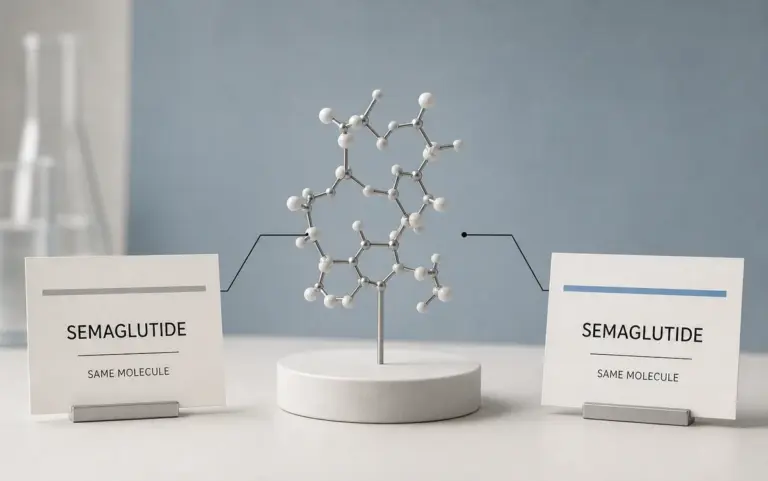
Wegovy vs Ozempic: Same Compound, Different Brand Identity
Wegovy and Ozempic share the same active molecule (semaglutide). They are distinct branded products with different indications and dose strengths, but the mechanism is…
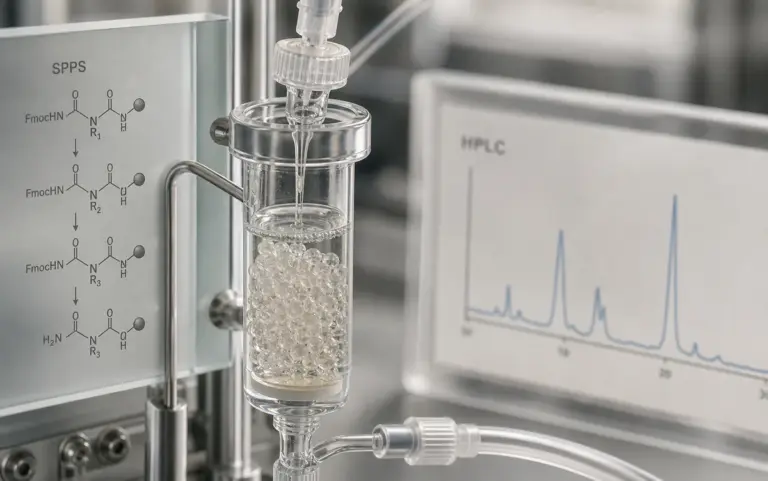
Solid-Phase Peptide Synthesis: How Research-Grade Peptides Are Actually Made
Solid-phase peptide synthesis is the chemistry behind every research peptide in the modern catalog: how the process works, why it governs purity, and how…
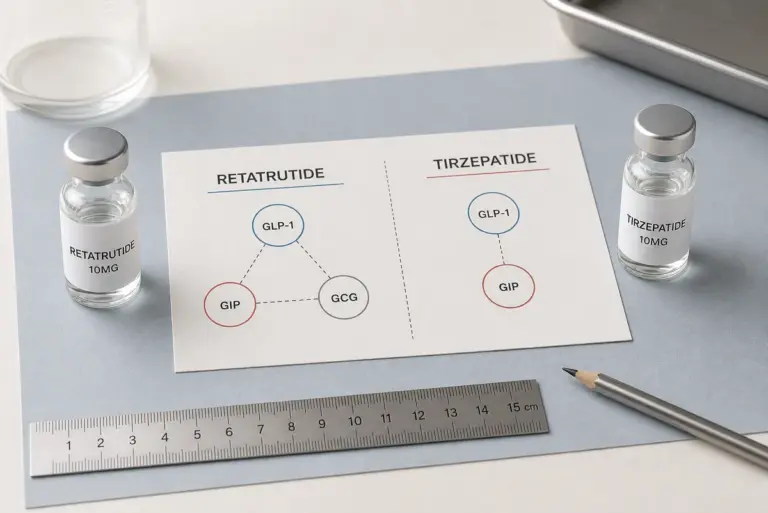
Retatrutide vs Tirzepatide: Triple-Agonist vs Dual-Agonist Mechanism
Both are incretin-mimetic research peptides, but they engage categorically different receptor combinations. The mechanism distinction is what determines which one suits a given protocol.