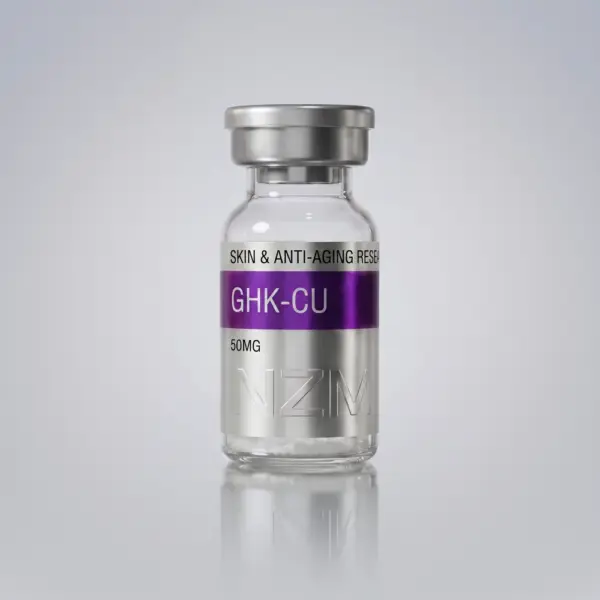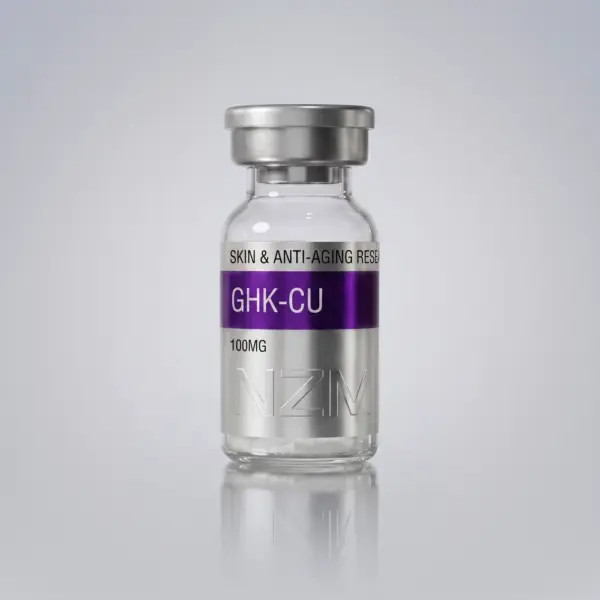
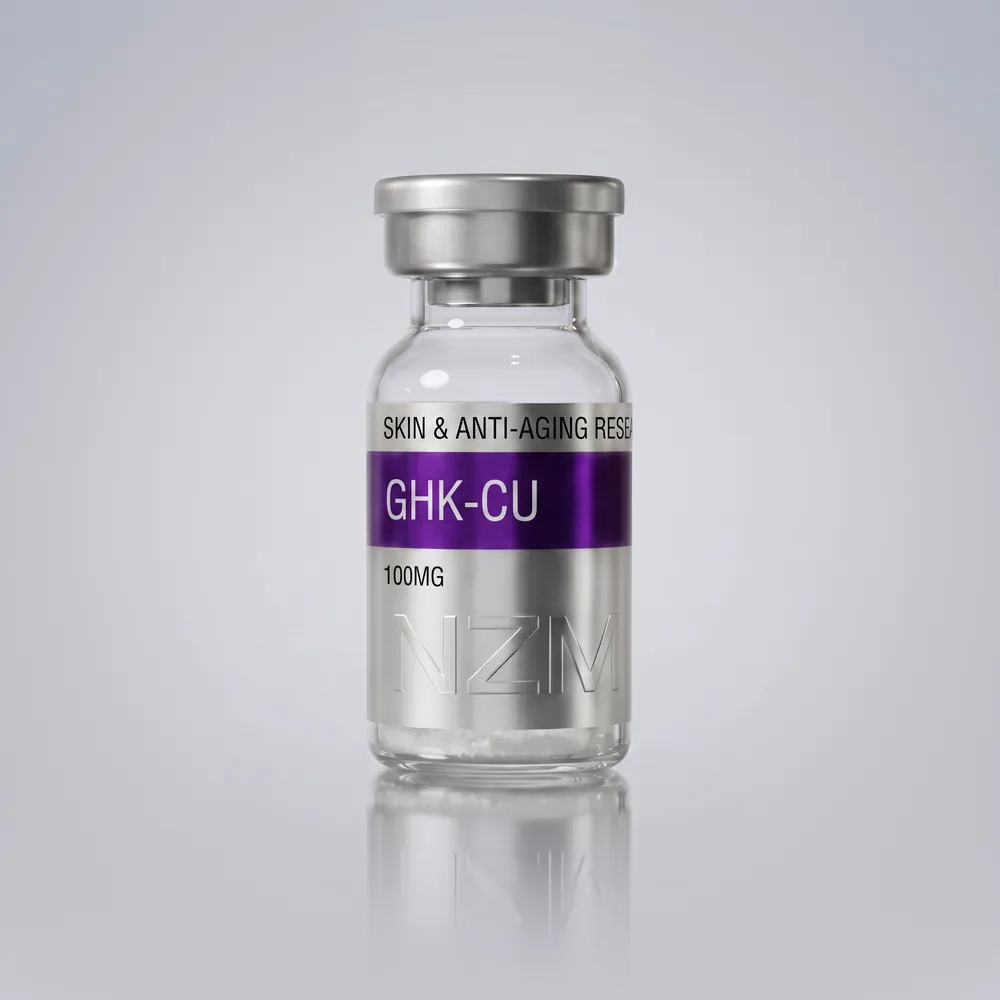
GHK-CU 100 MG Peptide
- ≥99% purity by HPLC
- Janoshik COA with every lot
- Lot-traceable from synthesis
- EU-synthesised
Specifications
Third Party Lab Tested
Every lot is independently HPLC-tested by Janoshik Analytical, Europe's reference laboratory for peptide purity assessment. The COA shipped with your order is theirs, not ours.
Storage & Handling
Lyophilized peptides should be stored below 16°C, protected from light and moisture, for up to 24 months. Once reconstituted, refrigerate and use within 30 days for protocol consistency.
Reconstitution
Reconstitute with bacteriostatic water using the volumes below. Add solvent slowly along the inside wall of the vial. Swirl gently, never shake, until fully dissolved.
Lab-handling protocol BAC Water · 0.9% benzyl alcohol The reconstitution solvent referenced above. Add to order →Copper-bound tripeptide research.
GHK-Cu is the copper complex of the naturally occurring tripeptide glycyl-L-histidyl-L-lysine. Copper coordination is central to the entity: published research examines GHK-Cu in gene-expression, extracellular-matrix, oxidative-stress and dermal-model contexts rather than treating it as the unbound GHK peptide. This 100 MG GHK-Cu peptide is supplied as a lyophilized research vial and provides the high-mass single-compound counterpart to the GHK-Cu 50 MG vial.
Every NZM-Labs production lot receives independent HPLC and mass-spectrometry analysis with lot-specific documentation. Products in the NZM-Peptide range are for laboratory research only.
| Compound | GHK-Cu |
|---|---|
| Sequence length | 3 amino acids |
| Molecular mass | 403.9 Da |
| Mechanism / research class | Copper-binding tripeptide |
| Example laboratory preparation | 100 MG vial with 5 mL bacteriostatic water (0.9% benzyl alcohol) |
| Calculated concentration | 20 mg per 1.0 mL |
| Supply format | GHK-Cu · 100 MG lyophilized research vial |
| Storage, lyophilized | store below 16°C for up to 24 months |
| Storage, reconstituted | refrigerate and use within 30 days |
Synthesised.
Verified.
Documented.
Backed by research.
Measured in results.
Each tag opens the cited literature behind that effect. References are linked to PubMed.
GHK-Cu is the most-cited copper-binding peptide in dermal research. Its literature dates to early-1980s skin-remodeling studies and continues to expand across collagen synthesis, glycosaminoglycan production, and matrix metalloproteinase regulation.
- Pickart L et al. BioMed Res Int. 2015;2015:648108. PubMed ↗
Bound Cu²⁺ at the histidine site is the active variable. Bare GHK without copper produces a categorically different transcriptional signature in dermal research models.
- Beretta G et al. Mol Cell Biochem. 2007;305(1-2):261-269. PubMed ↗
Questions?
We have answers.
No reviews yet
Write a review
Share your experience with GHK-CU 100 MG Peptide. Reviews are published after a manual check.